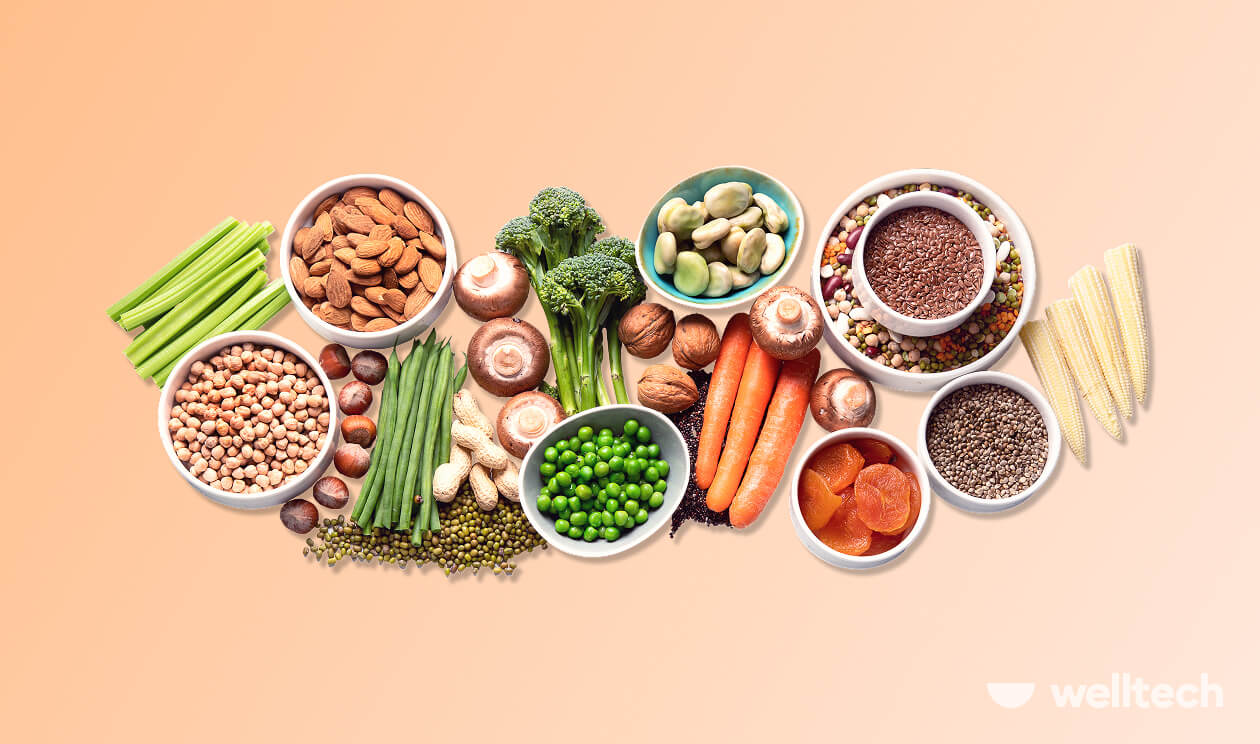
This way of eating doesn’t rely on metabolic tricks or strict food rules. It works because it promotes healthy digestion, appetite control, and calorie balance. Meals are built around fiber-rich foods that take up space, slow digestion, and help regulate hunger, while fat intake is kept moderate so calorie density stays reasonable.
If you’ve ever wondered why some people can eat large meals and stay lean, or why rich foods leave you full but oddly unsatisfied, the answer often comes down to fiber, fat, and how they interact in the body. This article breaks down the science behind a high-fiber low-fat diet, explains who it tends to work best for, and shows what it looks like in real meals you can cook at home.
What is a high-fiber, low-fat diet?
A high-fiber, low-fat diet is built on foods that digest slowly and provide volume without packing in excess calories. Fiber becomes the foundation of meals, while fat plays a supporting role rather than dominating the plate.
In practical terms, this means meals tend to center on:
Vegetables, fruits, legumes, and whole grains for fiber
Lean protein to support muscle and satiety
Small amounts of fat used for flavor
This approach doesn’t remove fat entirely, as healthy fats still matter for nutrient absorption and hormone function. The difference is quantity. When fat isn’t the main calorie source, meals become larger, lighter, and easier to regulate.
This is why many structured programs and clinical nutrition plans still rely on a high-fiber, low-fat diet meal plan as a baseline.
How fiber and fat affect hunger, fullness, and energy
Fiber isn’t digested in the small intestine. Instead, it absorbs water, expands in the stomach, and slows the movement of food through the digestive tract. This physical effect triggers satiety hormone receptors like GLP-1 and peptide YY, which tell your brain you’ve eaten enough.
Fat, on the other hand, is calorie-dense. At 9 calories per gram, it adds energy quickly without adding much volume. High-fat meals can be satisfying in the short term, but they make it easy to exceed calorie needs before fullness signals fully register.
When meals are high in fiber and moderate to low in fat:
You feel physically full sooner
Blood sugar rises more gradually
Hunger returns more slowly
In fact, research published in The Journal of Nutrition shows that higher fiber and lower fat intake is associated with better appetite control and reduced overall calorie consumption, even without conscious restriction. This is the core mechanism behind a high-fiber, low-fat diet.
Who benefits most from this dietary approach?
A high-fiber, low-fat diet often works well if you:
Like eating full plates of food
Feel sluggish after rich, fatty meals
Struggle with portion control despite healthy intentions
Desire weight loss without tracking every calorie
Struggle with irregularity and inconsistent energy
It’s also great for beginners, as the rules are simple, food choices are familiar, and meals don’t feel restrictive.
How much fat and fiber should you eat every day?
A low-fat, high-fiber meal is typically large in volume, rich in plant foods, and balanced with lean protein. Fiber-rich foods form the base, while fat is present in small, intentional amounts.
A good example would be:
A bowl of lentils and vegetables with herbs and spices
A baked sweet potato topped with beans
Oatmeal with fruit and seeds
These meals take longer to eat, digest more slowly, and leave you feeling satisfied without heaviness.
Recommended daily fiber intake
Most major nutrition organizations agree on these daily fiber targets:
Women: about 25 grams of fiber per day
Men: about 38 grams of fiber per day
Or roughly 14 grams of fiber per 1,000 calories consumed
These recommendations come from the National Academies of Sciences, Engineering, and Medicine and are reflected in USDA dietary guidelines.
Fiber supports fullness, gut motility, blood sugar control, and cholesterol regulation. Diets consistently low in fiber are linked to higher risk of weight gain, digestive issues, and metabolic problems, which is why adding more fiber to your diet is always a good idea.
Recommended daily fat intake
Fat needs are best expressed as a percentage of total calories, not a fixed gram amount. General guidelines suggest getting around 20–35% of daily calories from fat for most adults.
For someone eating around 2,000 calories per day, that equals roughly:
In a high fiber low fat diet, fat intake usually sits toward the lower end of that range, often around 20–25% of calories from fat, without eliminating it entirely.
Fat is essential for:
Problems tend to arise not from fat itself, but from diets where fat crowds out fiber-rich foods and drives calorie intake higher without improving fullness.
How these numbers work together
Fiber and fat influence appetite in different ways:
When fiber intake is high and fat intake is moderate, meals tend to be more filling per calorie.
Rather than aiming for perfection each day, most nutrition researchers recommend focusing on weekly averages and overall patterns. If most meals contain fiber-rich foods and fat is used intentionally rather than automatically, you’re likely within a healthy range.
Foods that make this diet work
Foods to emphasize
Fiber-rich foods are the backbone of a high-fiber, low-fat diet. These include:
Lentils, beans, and chickpeas
Oats, barley, quinoa, brown rice
Leafy greens and cruciferous vegetables
Fruits with skin like apples, pears, berries
Lean proteins help round out meals:
Fish and seafood
Skinless poultry
Tofu and tempeh
Low-fat dairy or yogurt
Egg whites
Foods to limit
These foods are not banned, but they tend to crowd out fiber and increase calorie density:
Practical recipes for a high-fiber low-fat diet
The good news is that a high-fiber, low-fat diet is far from boring. We’ve put together a few recipes to get you started (all values are approximate and based on USDA FoodData Central).
1. Spiced lentil and roasted vegetable grain bowl
This is the kind of meal that feels substantial and satisfying, even though it’s naturally low in fat. Roasting vegetables concentrates flavor, while lentils and grains provide structure and fiber.
Serves: 2
Ingredients
Dry green or brown lentils, ¾ cup
Cooked farro or barley, 1½ cups
Carrots, 2 medium, chopped
Red onion, 1 small, sliced
Broccoli florets, 2 cups
Smoked paprika, cumin, garlic powder
Lemon juice, 1–2 tablespoons
Olive oil, 1 teaspoon total
Salt and pepper
How to cook
Rinse lentils and simmer in water for 20–25 minutes until tender but not mushy. Drain.
Toss vegetables with spices and 1 teaspoon olive oil. Roast at 220°C (425°F) for 25–30 minutes, turning once.
Warm cooked farro or barley.
Assemble bowls with grains, lentils, and roasted vegetables. Finish with lemon juice and black pepper.
Nutrition (per bowl)
Calories: ~420
Fiber: ~18 g
Fat: ~4.5 g
Why it works: Lentils and whole grains slow digestion, while roasting adds bold flavor without heavy sauces.
2. White bean, tomato, and spinach stew
This dish relies on gentle simmering and acidity rather than fat for flavor. It’s excellent for batch cooking and develops even deeper flavors after a day in the fridge.
Serves: 3
Ingredients
Cannellini or navy beans, 2 cups cooked
Crushed tomatoes, 1½ cups
Onion, 1 medium, diced
Garlic, 3 cloves, minced
Fresh spinach, 3 packed cups
Vegetable broth, 1 cup
Dried oregano and thyme
Olive oil, 1 teaspoon
How to cook
Sauté onion and garlic in 1 teaspoon olive oil with a splash of broth to prevent sticking.
Add tomatoes, beans, herbs, and remaining broth.
Simmer uncovered for 20 minutes to thicken.
Stir in spinach until just wilted.
Nutrition (per serving)
Calories: ~330
Fiber: ~14 g
Fat: ~3 g
Why it works: Beans provide both soluble and insoluble fiber, supporting fullness and gut health.
3. Ginger-garlic tofu with soba noodles and vegetables
This recipe uses technique instead of oil. High heat, good seasoning, and smart cooking methods impart flavor without heaviness.
Serves: 2
Ingredients
Firm tofu, 200 g or 7 oz, pressed and cubed
Soba noodles, 120 g or ~4 oz cooked
Snow peas, 1 cup
Red bell pepper, 1 medium, sliced
Mushrooms, 1 cup sliced
Soy sauce (low sodium), 1½ tablespoons
Fresh ginger, 1 tablespoon grated
Garlic, 2 cloves
Rice vinegar or lime juice
How to cook
Dry-sear tofu in a nonstick pan until lightly golden on all sides. Remove and set aside.
Add vegetables with a splash of water and cook until just tender.
Add garlic, ginger, soy sauce, vinegar, and tofu back to the pan.
Toss with cooked soba noodles and heat through.
Nutrition (per serving)
Calories: ~410
Fiber: ~8 g
Fat: ~6 g
Why it works: Soba noodles are made from buckwheatvegetables add fiber, and tofu provides protein without excess fat.
4. Stuffed sweet potatoes with spiced chickpeas and yogurt drizzle
This recipe feels indulgent but stays firmly within a high-fiber low-fat diet framework.
Serves: 2
Ingredients
Sweet potatoes, 2 medium
Chickpeas, 1 cup cooked
Paprika, cumin, coriander
Plain low-fat Greek yogurt, ½ cup
Lemon juice, garlic powder
How to cook
Bake sweet potatoes at 200°C (400°F) for 40–45 minutes until soft.
Warm chickpeas in a pan with spices and a splash of water.
Mix yogurt with lemon juice and garlic powder.
Split sweet potatoes, top with chickpeas, and drizzle lightly with yogurt sauce.
Nutrition (per serving)
Calories: ~380
Fiber: ~15 g
Fat: ~4 g
Why it works: Sweet potatoes and chickpeas deliver fiber and slow carbs, while yogurt adds creaminess without excess fat.
5. Vegetable and barley soup with herb finish
This soup relies on whole grains for substance instead of cream or oil.
Serves: 4
Ingredients
Pearled barley, ¾ cup dry
Onion, celery, carrots, diced (3 cups total)
Zucchini or green beans, 1½ cups
Vegetable broth, 6 cups
Bay leaf, thyme, parsley
Olive oil, 1 teaspoon
How to cook
Sauté onion, celery, and carrots briefly with olive oil and broth.
Add barley and simmer for 35–40 minutes.
Add remaining vegetables for the last 10 minutes.
Finish with herbs and black pepper.
Nutrition (per serving)
Calories: ~290
Fiber: ~10 g
Fat: ~2.5 g
Why it works: Barley’s beta-glucan fiber supports fullness and blood sugar stability.
Bottom line
A high-fiber, low-fat diet works because it respects basic physiology. Fiber slows digestion and promotes satiety. Lower fat keeps calorie density in check. Together, they make eating feel easier, lighter, and more predictable.
For people who want sustainable habits rather than quick fixes, this approach remains one of the most practical and research-supported ways to eat.
FAQs
What is a low-fat, high-fiber meal?
A low-fat, high-fiber meal is one where fiber-rich foods make up the bulk of the plate, while fat is used sparingly rather than as the main calorie source. These meals typically center on vegetables, legumes, whole grains, or fruit, paired with lean protein.
From a physiological standpoint, fiber adds volume and slows digestion, which helps trigger fullness signals before excess calories are consumed. Keeping fat moderate reduces calorie density, allowing meals to feel satisfying without being heavy or overly rich.
Is a high-fiber, low-fat diet good for weight loss?
For many people, yes. A high-fiber, low-fat diet tends to make calorie control easier without strict tracking. Fiber increases satiety, and lower fat intake reduces the number of calories packed into each bite.
Research consistently shows that higher fiber intake is associated with lower body weight and improved appetite regulation. While no diet works for everyone, this approach is often easier to maintain long-term compared to highly restrictive plans.
Will I get enough healthy fats on a low-fat diet?
A well-planned low-fat diet still includes fat from whole foods like legumes, grains, seeds, nuts, and small amounts of oil. These sources provide essential fatty acids and support the absorption of fat-soluble vitamins.
The goal is not eliminating fat, but avoiding excess. Most people meet their fat needs even when staying toward the lower end of recommended intake, especially when eating a varied, whole-food diet.
How long does it take to adjust to eating more fiber?
Most people adapt within one to two weeks. During the transition, you may notice temporary bloating or gas as gut bacteria adjust to higher fiber intake.
Increasing fiber gradually, drinking enough fluids, and spreading fiber across meals helps minimize discomfort. Once adapted, digestion usually becomes more regular and predictable.
Can a high-fiber, low-fat diet support workouts and recovery?
Yes, fiber-rich carbohydrates provide steady energy, while lean protein supports muscle repair.
As long as meals include enough total calories and protein, this approach can support training without leaving you depleted. Many people find their energy levels feel more stable on lower-carb, higher-fat diets.